Afrezza
Dexcom G6
Summary
Inhalable regular human insulin. Cartridges come in three doses: 4, 8, and 12-unit doses.
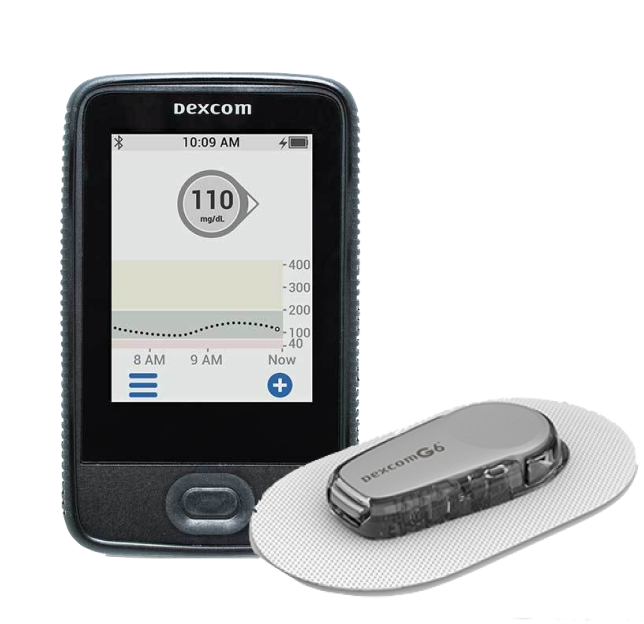
This sensor lasts for 10 days and only needs finger sticks as a backup. Dexcom G6 has 3 parts - sensor, transmitter, and receiver. Data can be viewed on a compatible mobile device or a separate receiver. Optional low and high blood sugar notifications are available for this system.
FDA approved for insertion on the abdomen (indicated for patients age 2 years and older) or the upper buttocks (ages 2-17 years).
MARD of 9%
Components
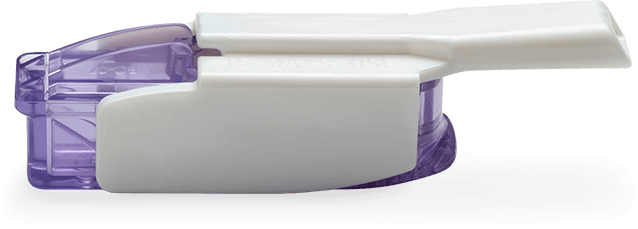
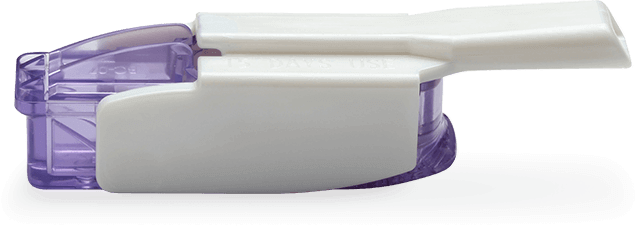
Inhaler
Small refillable inhaler contains a compartment for powdered insulin containing cartridges.
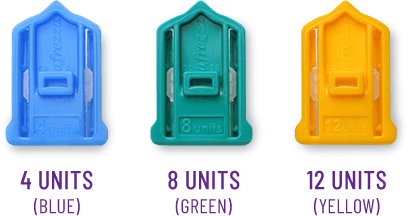
Cartridge
Cartridges come in three doses: 4, 8, and 12-unit doses. All color coded.
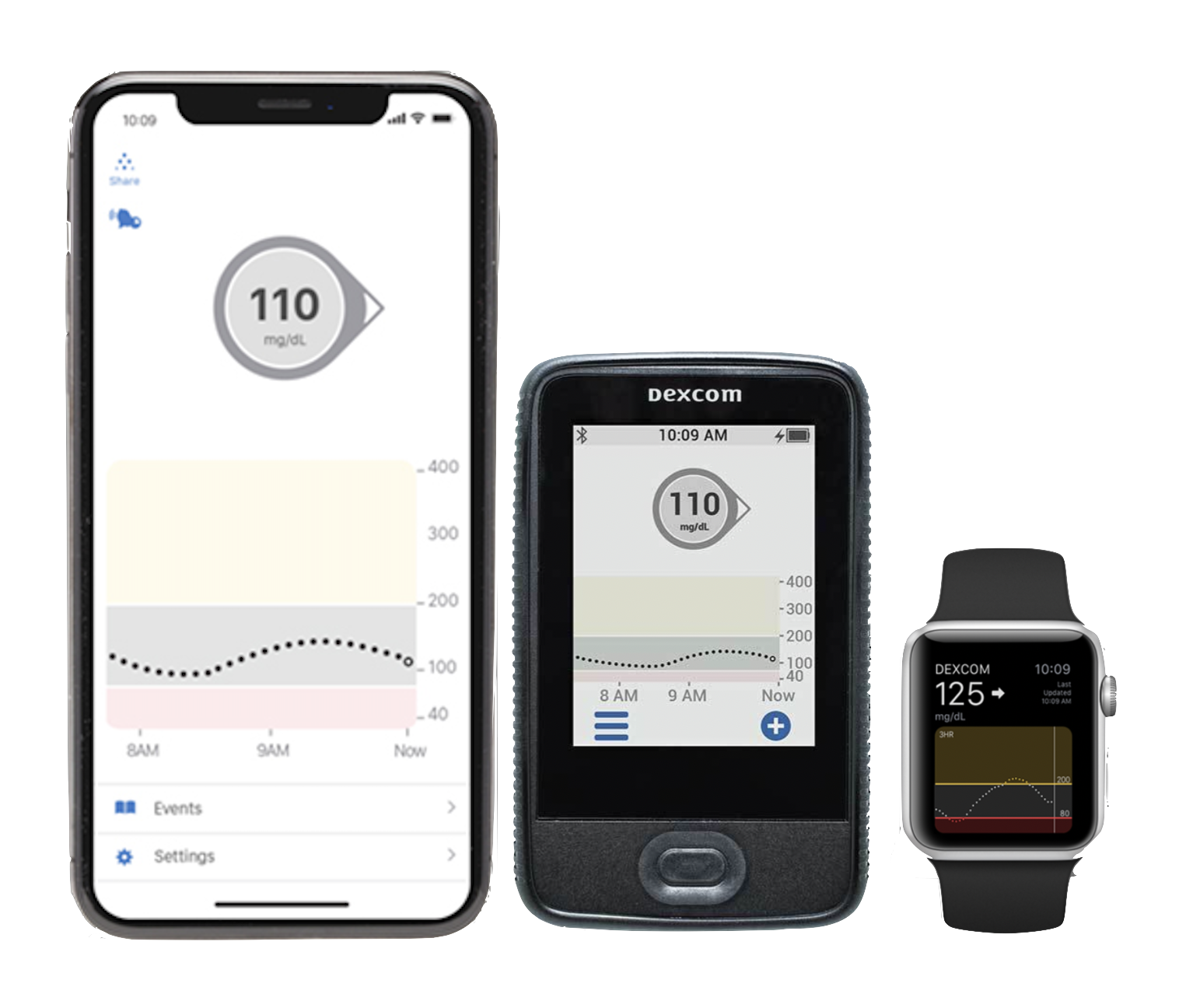
Receiver
Receives data automatically from the transmitter. Can be substituted by compatible smartphone and smartwatch. Available for both iOS and Android devices.
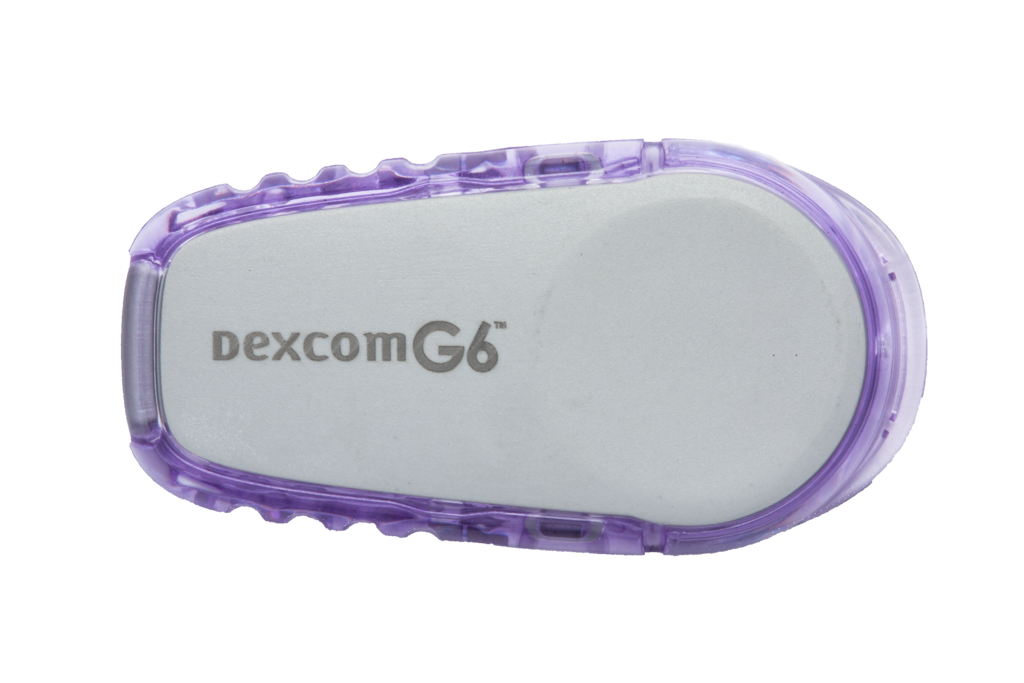
Transmitter
Sends readings from sensor to device, clips into sensor. Can be used for 90 days.
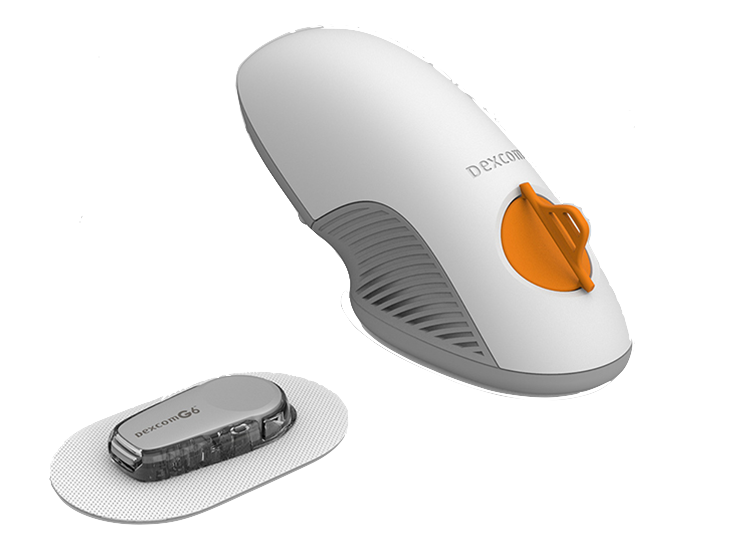
Sensor
Sensor uses a thin, flexible filament inserted just under the skin to measure glucose levels every 5 minutes. Push-button applicator allows sensor to be placed on the body in one step.
Device Details
Overview
Nothing on the body when not in use. Visible when dosing.
Small sensor can be worn in multiple areas.
Affordability and Access
$$$$
Widely covered. Price range; 0-$99/month, depending on insurance coverage. $35/month for medicare and commercial insurance plans.
$$$$
Widely covered. Provided by DME and/or Pharmacy. Price range; $0-$500/month.
Data Monitoring Options
No Options
Yes
Automatically and continuously sends data to the user’s Dexcom Clarity web-based cloud which is accessible by clinicians. Data upload is possible with Glooko and Tidepool data-management systems.
Data View Options
No Options
Yes
Users must download the Dexcom G6 and Dexcom Clarity apps to view and share data. Both apps provide multiple data views, sharing options, and access through the clinician portal using a code from the user's device. Caregivers can use the Dexcom Follow app to view data. Glooko and Tidepool can also be used to view data.
Duration and Storage
10 Days
Open cartridges last up to 10 days. Sealed cartridges may be stored in a refrigerator at 36°F - 46°F until the expiration date.
10 Days
Sensors last 10 days, and transmitters last 90 days. They are shipped 3 boxes at a time every 3 months – 9 sensors and 1 transmitter. Works at 50ºF – 108ºF
Vision / Auditory / Dexterity
NO text to speech
NO vibration alerts
LITTLE dexterity needed
YES text to speech
YES vibration alerts
3 sound sources
A LOT of dexterity needed
Patient Considerations
Active Lifestyle
Body free of devices. Does not remain attached to the body.
Water-resistant when submerged in 2.4 meters of water and must be within 20 (unobstructed) feet of the receiver or mobile device.
Avoiding Highs and Lows
Very short-acting. Absorbs quickly through the lungs to correct high blood sugar but requires attention to prevent lows.
Custom alerts can be set for highs, lows, and rapidly rising or falling glucose levels. Trend arrows show the direction glucose is heading, with the rate of change.
Comfort
Many components. Have to carry multiple cartridges that can be bulky.
Low profile and low maintenance sensor application.
Easy Insulin Dosing
Less precise but easy dosing. Dosing may be less precise due to the inhaled method of dosing, but color-coded cartridges make dosing easier. Dosing can also be done based on small, medium, or large meals and can be administered 1-2 hours post meals.
Real-time data and alerts make dose adjustment easier.
Easy to Use
Simple design. Whistle-like device for inhaling insulin.
Flexible pump integration. Can be paired with multiple different types of pumps which gives flexibility for how to use the data.
Fewer Fingersticks
Frequent finger-sticks are required.
Factory-calibrated sensor. Finger sticks needed for backup only.
Privacy
Hideable. Small, discreet, and portable device that's not as noticeable as injections.
Hypoglycemia safety alarm. Discreet but built-in hypoglycemia safety alarm alerts users when glucose is below 55 mg/dl and is always on.